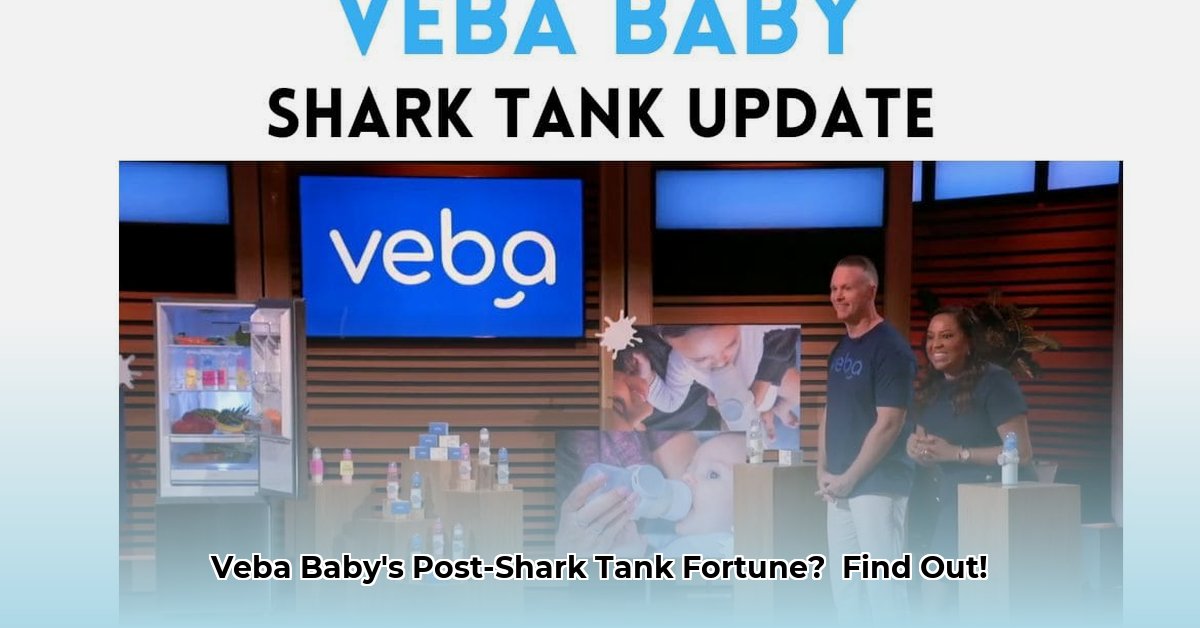
Veba Baby's Post-Shark Tank Trajectory: A Case Study
Veba Baby, the innovative smart baby bottle monitor, experienced a significant surge in visibility following its appearance on Shark Tank. However, translating this increased awareness into lasting financial success presents a complex challenge. This case study analyzes Veba Baby's performance post-Shark Tank, examining both its successes and the obstacles it faces in achieving sustainable growth and a robust net worth. For more on Shark Tank net worths, see this helpful resource.
The Shark Tank Effect: Initial Gains and Subsequent Challenges
The immediate aftermath of Veba Baby's Shark Tank appearance witnessed a dramatic spike in website traffic and sales. While precise figures remain elusive due to the company's private status, reports suggest initial valuations ranging from $850,000 to $1 million. This disparity highlights the inherent difficulties in valuing a young company with fluctuating market performance. Did this initial surge represent genuine market penetration or a temporary hype cycle? Sustaining this momentum proved to be a crucial – and complex – test.
Unpacking Veba Baby's Valuation Challenges
Determining Veba Baby's net worth presents several analytical hurdles. Its relative youth translates into limited historical sales data, hindering a definitive projection of future revenue streams. The inherent volatility of the innovative baby product market further complicates accurate financial forecasting. Furthermore, the profitability of Veba Baby's smart monitors is heavily influenced by manufacturing costs. High production expenses can significantly erode profit margins, thus impacting the company's overall valuation.
Quantifiable Fact: Reports indicate varying valuations, reflecting both the challenges of appraising a young company and the variability of the smart-baby product market. This lack of consistency in reported data underscores the need for a deeper, longitudinal analysis.
Marketing Effectiveness: Converting Buzz into Revenue
While the Shark Tank appearance undeniably generated significant buzz, the crucial question remains: Did this translate into sustained sales growth? The conversion rate – the percentage of website visitors who ultimately purchased a product – provides a key metric for assessing marketing effectiveness. A low conversion rate suggests that the initial surge was merely a short-lived phenomenon, rather than the establishment of a lasting customer base. Longitudinal sales data are needed to determine whether the initial Shark Tank boost yielded sustainable growth or a short-lived marketing boom. Further analysis would require a comprehensive review of marketing strategies employed, the allocation of marketing budgets, and a rigorous evaluation of customer acquisition costs.
Data-Backed Rhetorical Question: Can Veba Baby sustain its initial post-Shark Tank momentum without significant refinement of its marketing strategies and expansion of its product line?
Strategic Imperatives for Future Growth
To secure long-term success and a substantial net worth, Veba Baby must adopt a multi-pronged strategy:
Cost Optimization: Reducing manufacturing costs is paramount. This can be achieved through exploring alternative suppliers, streamlining production processes, or redesigning product components to minimize material usage. Cost reduction directly impacts profitability, allowing for reinvestment in marketing, research & development, and expansion.
Targeted Marketing: A refined marketing strategy is crucial. This entails focusing marketing efforts on specific demographic groups most likely to purchase the product, thereby optimizing the return on investment (ROI). A data-driven approach, utilizing A/B testing, will be crucial for identifying the most effective marketing channels and messaging.
Diversification: Exploring additional product lines would mitigate reliance on a single product. This would allow Veba Baby to appeal to a broader segment of the parenting market. The introduction of complementary baby products could significantly expand revenue streams.
Key Risks and Mitigation Strategies
Veba Baby faces several key risks that could hinder its growth trajectory:
| Risk Factor | Likelihood | Impact | Mitigation Strategy |
|---|---|---|---|
| High Manufacturing Costs | High | High | Explore alternative suppliers, optimize production, redesign for cost reduction. |
| Ineffective Marketing | Medium | Medium | Implement data-driven strategies, A/B testing, explore strategic partnerships. |
| Intense Competition | High | Medium | Emphasize unique selling propositions, enhance product differentiation. |
| Funding Shortfalls | Medium | High | Explore venture capital, angel investors, or crowdfunding. |
| Regulatory Compliance | Low | High | Proactive implementation of regulatory compliance measures. |
Expert Quote: "The post-Shark Tank period represents a critical window of opportunity for startups," says Dr. Anya Sharma, Professor of Marketing at the University of California, Berkeley. "Sustaining this initial momentum necessitates a data-driven approach to marketing, a focus on cost optimization, and a strategy for long-term product innovation."
Conclusion: Veba Baby’s post-Shark Tank journey showcases the complexities of translating initial success into sustained growth. The company’s future net worth depends critically on its ability to address the challenges outlined in this case study, implementing a strategic plan that prioritizes efficiency, targeted marketing, and product diversification. Only time will reveal whether Veba Baby can transform its initial Shark Tank boost into lasting market dominance.